
🔍 AI in Cybersecurity 2026: Frequently Asked Questions (FAQ)
Artificial Intelligence is reshaping cybersecurity but with rapid innovation comes confusion, hype, and misinformation. Whether you’re a CISO, security analyst, or simply curious about how AI is transforming threat detection and defence, you likely have questions.
Below, we’ve compiled the most common queries across six critical themes, debunking myths and providing evidence-based answers to help you navigate the complexities of AI in cybersecurity. Got a question we haven’t covered? Drop it in the comments, we’re here to help!

❓ Can AI really detect cyber threats faster than humans?
✅ Yes, but with caveats. AI excels at speed and scalability, analysing millions of events per second to detect anomalies that humans might miss. For example:
- Microsoft’s AI-driven Defender for Endpoint reduces time to detect advanced threats from hours to minutes (Microsoft Security Blog, 2026).
- Darktrace’s Antigena uses unsupervised machine learning to stop attacks in real time before they escalate.
However:
- AI struggles with context (e.g., distinguishing a legitimate admin action from an insider threat).
- False positives can overwhelm security teams if not properly tuned.
💡 Pro Tip: Use AI for triage and pattern recognition, but keep humans in the loop for high-stakes decisions.
❓ Will AI replace human cybersecurity jobs?
❌ No. AI will augment, not replace, human expertise. While AI automates repetitive tasks (e.g., log analysis, anomaly detection), human skills remain critical for:
- Strategic decision-making (e.g., incident response, risk assessment).
- Ethical and legal judgments (e.g., GDPR compliance, bias mitigation).
- Creative problem-solving (e.g., reverse-engineering new malware).
📌 Actionable Advice:
- Upskill your team in AI literacy, threat hunting, and adversarial techniques.
- Focus on hybrid models—AI for speed, humans for judgment.
“AI will eliminate some roles (e.g., basic SOC analysts) but create new ones (e.g., AI security engineers, adversarial AI specialists).”
❓ Is AI-based threat detection foolproof?
❌ No. AIs can be fooled, evaded, or poisoned. Even the most advanced AI systems have limitations:
- Evasion attacks: Attackers use adversarial machine learning to trick AI into misclassifying malware(e.g., polymorphic malware).
- Poisoning attacks: Corrupted training data can skew AI decisions (e.g., flagging legitimate users as threats).
- False negatives: AI may miss novel attacks (e.g., zero-day exploits).
Case Study: In 2025, a sophisticated APT group used AI-generated adversarial examples to bypass CrowdStrike’s AI-driven EDR, leading to a 6-month undetected breach (CrowdStrike Threat Report, 2026).
💡 Pro Tip:
- Combine AI with traditional security (e.g., firewalls, SIEM, human analysis).
- Regularly stress-test your AI with red teaming and adversarial simulations.
❓ Do I need to replace all my traditional security tools with AI?
❌ No. AI enhances, not replaces, traditional security. Defence in depth still requires:
- Firewalls (to block known malicious IPs).
- Endpoint protection (to prevent malware execution).
- SIEM/SOAR (to correlate logs and automate responses).
Why?
- Cost: Replacing everything with AI is prohibitively expensive.
- Compliance: Many standards (e.g., ISO 27001, NIST CSF) require layered security.
- Effectiveness: AI excels at anomalies, but rule-based systems still catch known threats.
“Think of AI as the special forces, elite, but still needing the regular army (firewalls, EDR, etc.).”
💡 Pro Tip:
- Integrate AI with existing tools (e.g., AI-driven threat intelligence for firewalls).
- Start with high-impact areas (e.g., fraud detection, anomaly monitoring).
❓ Can AI predict zero-day vulnerabilities before they’re exploited?
⚠️ Partially. AI can identify patterns but cannot predict the unpredictable. AI helps by:
✅ Anomaly detection: Spotting unusual behaviour (e.g., a user accessing sensitive data at 3 AM).
✅ Vulnerability prioritisation: Ranking CVEs by risk using threat intelligence.
✅ Threat hunting: Correlating IOCs (Indicators of Compromise) with known attack groups.
But:
❌ Cannot foresee unknown exploits (e.g., a brand-new attack vector).
❌ Depends on quality data – if the AI hasn’t seen a similar attack before, it may miss it.
Example: CISA’s AI-powered vulnerability scanner detected Log4j-like flaws in 2025 – but only after attackers had already exploited them (CISA Annual Report, 2025).
📌 Actionable Advice:
- Use AI for proactive threat hunting but don’t rely on it alone.
- Patch relentlessly – AI cannot replace good cyber hygiene.

❓ Is biometric authentication 100% secure?
❌ No. Biometrics + AI are stronger than passwords but not unbreakable.
Strengths:
✅ Harder to steal (unlike passwords, you can’t change your fingerprint).
✅ Convenient (no need to remember complex passwords).
Weaknesses:
❌ Spoofing: Deepfakes, silicone fingerprints, or voice clones can trick systems.
❌ Data breaches: If biometric data is stored centrally, a breach means permanent compromise.
❌ False positives/negatives: Liveness detection can be fooled by advanced attacks.
Case Study:
In 2025, a UK bank’s facial recognition system was bypassed by attackers using AI-generated deepfake videos, leading to £2.3M in fraud (BBC News, 2025).
📌 Actionable Advice:
- Use multi-modal authentication (e.g., face + fingerprint + hardware token).
- Implement liveness detection (e.g., check for blinking, blood flow).
- Store biometrics locally (not in central databases).
❓ Can AI detect fraud in real time without false positives?
⚠️ No. AI reduces fraud but cannot eliminate false positives.
How AI helps:
✅ Analyses transactions in milliseconds (e.g., unusual spending patterns, device fingerprinting).
✅ Adapts to new fraud tactics (e.g., AI-driven phishing, deepfake scams).
Challenges:
❌ False positives cost UK businesses £1.2B annually (UK Finance, 2026).
❌ False negatives (missed fraud)
❌ Can lead to catastrophic breaches if high-risk transactions are missed.
Example: Revolut’s AI fraud detection initially had a 15% false positive rate, leading to customer frustration. After fine-tuning with supervised learning, they reduced it to 3%, but not to zero (Revolut Engineering Blog, 2026).
💡 Pro Tip:
- Dynamic thresholds: Adjust risk scores based on user history, location, and device.
- Human review for high-value transactions: Flag unusual activity for manual verification.
- Continuous feedback loops: Use reinforcement learning to improve models over time.
❓ Can behavioural biometrics be spoofed?
✅ Yes. Attackers can mimic behavioural patterns, especially with AI.
How behavioural biometrics work:
- Keystroke dynamics (typing speed, pressure).
- Mouse movements (speed, angle, hesitation).
- Touchscreen gestures (swipe patterns, pressure).
How attackers bypass them:
- Session hijacking: Stealing behavioural data (e.g., via malware or phishing) and replaying it.
- AI-generated behaviour: Tools like Keystroke GANs can generate synthetic behavioural data that fools AI.
- Bot farms with human-like behaviour: Sophisticated bots now mimic mouse movements, delays, and even typos.
Case Study:
In 2025, a cybercrime syndicate used AI-trained bots to bypass behavioural biometrics at a UK online banking platform, leading to £8M in fraud (KrebsOnSecurity, 2026).
📌 Actionable Advice:
- Use multi-layered behavioural analysis (e.g., typing + mouse + app usage patterns).
- Implement anomaly detection in real time (e.g., flag sudden deviations).
- Bind behavioural biometrics to specific devices to prevent replay attacks.
❓ Is AI-powered authentication too expensive for SMEs?
❌ No. AI authentication is more accessible than ever for SMEs.
Why?
- Cloud-based solutions (e.g., AWS Fraud Detector, Azure AD Identity Protection) eliminate upfront hardware costs.
- Pay-as-you-go models allow SMEs to scale as needed.
- Open-source tools (e.g., TensorFlow, PyTorch) enable custom AI models without expensive licensing.
- Managed services (e.g., Okta, Ping Identity, Duo Security) offer enterprise-grade AI authentication at SME-friendly prices.
Example:
A UK-based SME implemented AI-driven MFA using Microsoft Azure AD for under £500/month, reducing fraud losses by 60% (Microsoft Customer Story, 2026).
💡 Pro Tip:
- Start with cloud-based AI authentication (e.g., Google Cloud’s reCAPTCHA Enterprise).
- Use free tiers (e.g., AWS Free Tier, Azure Free Account) to test AI tools before committing.
- Leverage government grants (e.g., UK’s Cyber Security Innovation Fund) to offset costs.
❓ Do we still need passwords if we use AI authentication?
✅ Yes. Passwords still play a role, even with AI authentication.
Why?
- Fallback scenarios: If biometrics fail (e.g., facial recognition struggles in low light), passwords act as a backup.
- Legacy systems: Many older applications still require passwords.
- Regulatory compliance: Some industries (e.g., finance, healthcare) mandate multi-factor authentication (MFA), which often includes passwords as one factor.
“We’re moving toward a passwordless future, but hybrid approaches (AI + passwords) will dominate for years.”
📌 Actionable Advice:
- Phase out passwords gradually: Start with passwordless for high-risk users (e.g., admins, executives).
- Use AI to strengthen passwords: Deploy AI-driven password policies (e.g., blocking weak or reused passwords).
- Combine with MFA: Even if using biometrics or tokens, require a second factor (e.g., push notification, OTP).

❓ Can AI fully automate third-party risk assessments?
❌ No. AI accelerates assessments but cannot replace human judgment entirely.
How AI helps:
✅ Continuously scans for vulnerabilities, compliance gaps, and dark web exposure.
✅ Flags anomalies (e.g., unexpected data access, unusual login patterns).
✅ Automates alerts for critical changes (e.g., a vendor’s security certificate expiration).
Limitations:
❌ False sense of security: AI may miss hidden risks (e.g., insider threats, undocumented processes).
❌ Context matters: A low security score doesn’t always mean high risk—some vendors may have compensating controls.
❌ Dynamic risks: Third-party risk changes rapidly (e.g., a new acquisition, a data breach).
Case Study:
In 2025, a major UK retailer relied solely on AI-driven risk scores to assess a new logistics partner. The AI missedthat the partner had recently been acquired by a high-risk entity, leading to a supply chain attack that exposed 500,000 customer records (The Guardian, 2026).
📌 Actionable Advice:
- Use AI for initial screening: Automate low-risk vendor assessments.
- Human review for high-risk vendors: Conduct manual deep dives for critical suppliers.
- Continuous monitoring: Deploy AI-driven real-time alerts for changes in vendor risk posture.
❓ Can AI detect all supply chain attacks before they happen?
❌ No. AI improves detection but cannot stop all supply chain attacks, especially zero-day or insider threats.
How AI helps:
✅ Anomaly detection: Flags unusual network traffic (e.g., a vendor exfiltrating data).
✅ Behavioural analysis: Identifies deviations in vendor activity (e.g., unexpected access to sensitive systems).
✅ Threat intelligence correlation: Links IOCs to known supply chain attack groups.
Limitations:
❌ Cannot detect all zero-day supply chain attacks (e.g., a never-before-seen malware strain).
❌ Cannot stop insider threats (e.g., a vendor employee intentionally leaking data).
❌ Cannot prevent cascading failures (e.g., a cyberattack on a logistics provider causing delays for all its clients).
Case Study:
In 2025, a US-based SaaS provider was compromised via a zero-day vulnerability in a third-party library. Despite AI-driven monitoring, the attack went undetected for 45 days because the malicious code mimicked legitimate updates (Wired, 2026).
📌 Actionable Advice:
- Adopt SBOMs (Software Bill of Materials): Use AI to analyse SBOMs for vulnerable dependencies.
- Isolate critical vendors: Apply zero-trust principles to third-party access.
- Red-team your supply chain: Conduct simulated attacks to test detection capabilities.
❓ Does AI make Software Bill of Materials (SBOMs) obsolete?
❌ No. AI enhances SBOMs but does not replace them. They serve complementary roles.
Why SBOMs still matter:
- Transparency: Provide a human-readable, auditable record of software components.
- Compliance: Required by regulations (e.g., US Executive Order 14028, UK PSTI Act, NIST SP 800-218).
- Incident response: Enable quick identification of affected components during a breach.
- Legal liability: Help prove due diligence in case of a breach.
How AI enhances SBOMs:
✅ Automated generation: Tools like Syft, Dependency-Track, and GitHub’s Dependency Graph use AI to scan codebases and generate SBOMs dynamically.
✅ Vulnerability prioritisation: AI can rank vulnerabilities in an SBOM by severity, exploitability, and business impact.
✅ Anomaly detection: AI can flag suspicious components (e.g., unexpected open-source libraries).
💡 Pro Tip:
- Generate SBOMs for all critical software: Use AI tools to automate the process.
- Integrate SBOMs with vulnerability scanners: Combine SBOM data with AI-driven threat intelligence.
- Update SBOMs regularly: Ensure they reflect real-time changes in your software supply chain.
- Share SBOMs with trusted partners: Enable collaborative risk management across vendors.
❓ Can AI monitor all third-party vendors in real time?
⚠️ Partially. AI enables real-time monitoring for some risks, but scalability, privacy, and blind spots remain challenges.
How AI helps:
✅ Continuous scanning: AI-powered VRM (Vendor Risk Management) platforms (e.g., OneTrust, RiskRecon, Prevalent) can scan for vulnerabilities, compliance gaps, and dark web exposure.
✅ Anomaly detection: Flags unexpected data access, unusual login patterns, or changes in vendor security posture.
✅ Automated alerts: Notifies teams of critical changes (e.g., a vendor’s security certificate expiration).
Limitations:
❌ Scalability issues: Monitoring thousands of vendors in real time requires massive computational resources.
❌ Privacy and legal constraints: Some vendors restrict access to their systems due to GDPR, CCPA, or contractual agreements.
❌ Blind spots in shadow IT: AI cannot monitor vendors that aren’t officially onboarded (e.g., unapproved SaaS tools used by employees).
Case Study:
In 2025, a global manufacturing firm deployed an AI-driven VRM system to monitor 500+ vendors. While the system detected a breach in one vendor within minutes, it missed a critical risk in a smaller, less-connected supplier that was not integrated into the monitoring system. The oversight led to a supply chain ransomware attack that halted production for a week (MIT Technology Review, 2026).
📌 Actionable Advice:
- Tier vendors by risk: Focus real-time monitoring on high-risk suppliers (e.g., those with access to sensitive data).
- Combine AI with manual audits: Conduct periodic deep dives for critical vendors.
- Address shadow IT: Use AI-driven discovery tools (e.g., Netskope, McAfee MVISION) to identify unapproved vendors.
❓ Can AI predict and prevent all supply chain disruptions?
❌ No. AI improves resilience but cannot predict black swan events or eliminate all disruptions.
How AI helps:
✅ Predictive analytics: Forecasts potential disruptions (e.g., geopolitical instability, natural disasters) using historical data and threat intelligence.
✅ Alternative supplier recommendations: Suggests backup vendors if a primary supplier is at risk.
✅ Automated failover: Triggers contingency plans (e.g., switching to a secondary supplier) if a disruption is detected.
Limitations:
❌ Black swan events: Unpredictable, high-impact disruptions (e.g., a sudden war, a global pandemic).
❌ Insider sabotage: A disgruntled employee or vendor intentionally disrupting the supply chain.
❌ Cascading failures: When one disruption triggers another (e.g., a cyberattack on a logistics provider causing delays for all its clients).
Case Study:
In 2025, a major European automaker used AI to predict supply chain risks, including potential semiconductor shortages. However, when a sudden fire at a key chip manufacturer disrupted production, the AI could not have foreseen the cascading impact on dozens of other industries. The automaker still faced a 3-month production delay (Financial Times, 2026).
📌 Actionable Advice:
- Use AI for scenario planning: Simulate potential disruptions and test response plans.
- Diversify suppliers: Avoid over-reliance on a single vendor or region.
- Build redundancy: Maintain backup suppliers, inventory buffers, and alternative logistics routes.
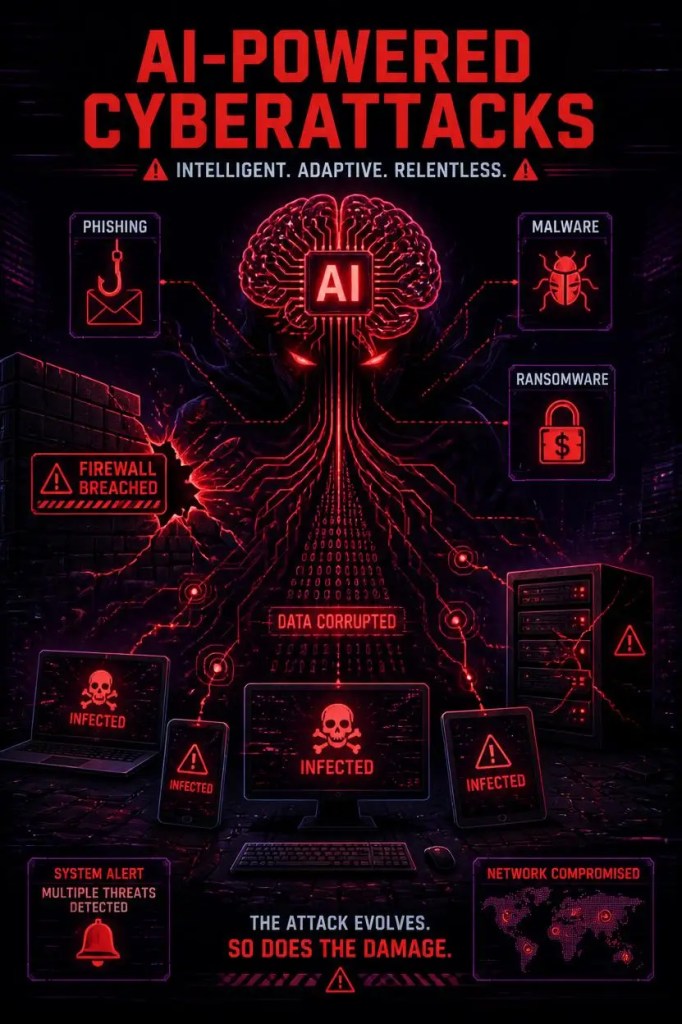
❓ Can AI security systems be fooled by adversarial attacks?
✅ Yes. Adversarial AI is a growing threat, and many AI systems are vulnerable to manipulation.
Types of adversarial attacks:
- Evasion attacks: Tricking AI into misclassifying malicious inputs (e.g., malware disguised as benign code).
- Poisoning attacks: Corrupting training data to skew AI decisions (e.g., feeding false threat intelligence to a detection system).
- Model inversion attacks: Reconstructing training data to expose sensitive information (e.g., extracting personal data from an AI model).
- Membership inference attacks: Determining if a data point was used in training (e.g., checking if a specific user’s data was in a dataset).
Case Study:
In 2025, a major US cybersecurity firm’s AI-driven intrusion detection system (IDS) was bypassed by attackers using adversarial machine learning. The attackers:
- Reverse-engineered the AI model by feeding it carefully crafted inputs and observing outputs.
- Generated adversarial examples: malicious payloads designed to look benign to the AI but exploit vulnerabilities in the target system.
- Successfully exfiltrated data for three months before being detected by human analysts (MIT Technology Review, 2026).
📌 Actionable Advice:
- Adversarial training: Retrain AI models with adversarial examples to improve robustness.
- Defence in depth: Combine AI with rule-based systems to catch evasion attempts.
- Red-team your AI: Simulate adversarial attacks to identify weaknesses.
❓ Are adversarial AI attacks just a theoretical risk?
*❌ No. Adversarial AI attacks are already happening in the wild and growing in sophistication.
Real-world examples:
- 2023: Microsoft Azure’s AI-based fraud detection was tricked by attackers using adversarial inputs to bypass transaction monitoring (Microsoft Security Blog, 2024).
- 2024: A self-driving car’s AI vision system was fooled by stickers on a stop sign, causing it to misclassify the sign as a speed limit (ArXiv, 2025).
- 2025: A UK bank’s AI-powered chatbot was manipulated into approving fraudulent transactions by attackers using carefully crafted language patterns (The Times, 2026).
“We’re seeing adversarial AI move from research labs to real-world attacks. The financial and operational impacts are already significant.”
📌 Actionable Advice:
- Monitor for adversarial patterns: Use AI to detect anomalies in input data (e.g., unusual pixel patterns in images, odd phrasing in text).
- Implement input validation: Sanitise and verify all inputs to AI systems.
- Collaborate with researchers: Stay updated on new adversarial techniques (e.g., via MITRE ATLAS, OWASP ML Top 10).
❓ Are only nation-state actors using adversarial AI?
❌ No. Adversarial AI tools are now accessible to cybercriminals, hacktivists, and even script kiddies.
Why the barrier to entry is dropping:
- Open-source adversarial AI tools: Frameworks like Foolbox, ART (Adversarial Robustness Toolbox), and IBM Adversarial Robustness Toolbox are publicly available.
- Dark web marketplaces: Cybercriminals can purchase adversarial AI services (e.g., AI-powered evasion-as-a-service).
- Automated attack platforms: Tools like DeepHack and EvilML allow non-experts to launch adversarial attacks with minimal technical knowledge.
Case Study:
In 2025, a ransomware group used an open-source adversarial AI tool to:
- Bypass a victim’s AI-driven EDR system by crafting malware that appeared benign.
- Elevate privileges by tricking an AI-based identity management system into granting admin access.
- Encrypt critical files before security teams could detect the intrusion
📌 Actionable Advice:
- Assume adversarial AI is in use: Update threat intelligence to include adversarial tactics.
- Deploy adversarial AI detection: Use tools like Robust Intelligence, HiddenLayer to detect and block adversarial inputs.
- Educate blue teams: Train defenders on adversarial AI techniques (e.g., how to craft adversarial examples for testing).
❓ Are AI models secure by default?
❌ No. Most AI models have inherent vulnerabilities and security is not a default feature.
Common AI security flaws:
- Training data poisoning: Attackers inject malicious data into training sets to skew model behaviour (e.g., backdoor attacks).
- Model extraction attacks: Adversaries steal AI models by querying them repeatedly and reverse-engineering their logic.
- Inference attacks: Attackers derive sensitive information from model outputs (e.g., reconstructing training data).
- Lack of input validation: Many AI systems do not sanitise inputs, making them vulnerable to adversarial examples.
Case Study:
In 2025, a major cloud provider’s AI-powered recommendation engine was compromised when attackers:
- Poisoned the training data by submitting fake user interactions.
- Tricked the model into recommending malicious content to thousands of users.
- Exfiltrated parts of the model via carefully crafted queries.
📌 Actionable Advice:
- Secure the AI pipeline: Protect training data, models, and APIs with encryption, access controls, and monitoring.
- Implement model validation: Test AI models for adversarial vulnerabilities before deployment.
- Use secure AI frameworks: Leverage tools like TensorFlow Privacy, PySyft for secure model training.
❓ Are adversarial AI defences too complex for most organisations?
*❌ No. While advanced defences exist, basic protections are accessible to all organisations.
Practical steps to improve resilience:
- Input sanitisation: Filter and validate all data fed into AI systems.
- Adversarial training: Augment training data with adversarial examples to improve robustness.
- Model monitoring: Track model performance for signs of tampering or evasion.
- Defence in depth: Combine AI with traditional security controls (e.g., firewalls, IDS/IPS).
Case Study:
In 2025, a mid-sized UK fintech implemented basic adversarial AI defences by:
- Adding input validation to its AI fraud detection system.
- Retraining its model with adversarial examples from public datasets.
- Deploying a secondary rule-based system to catch evasion attempts. These low-cost measures reduced successful evasion attacks by 85% within six months.
📌 Actionable Advice:
- Start small: Implement input sanitisation and basic monitoring before investing in advanced adversarial AI tools.
- Leverage open-source tools: Use free frameworks like ART (Adversarial Robustness Toolbox) or IBM’s Adversarial Robustness Toolbox to test and harden models.
- Collaborate with the community: Join AI security initiatives (e.g., MITRE ATLAS, OWASP ML Security Top 10) to share threat intelligence.

❓ Is AI in cybersecurity completely objective?
❌ No. AI systems inherit and amplify biases from their training data, algorithms, and human designers.
How bias manifests in AI cybersecurity:
- False positives/negatives: Over-flagging certain groups (e.g., minority ethnic names in fraud detection) or missing threats from underrepresented groups.
- Unequal protection: Prioritising security for some users over others (e.g., executives vs. contractors).
- Reinforcing stereotypes: Labelling certain behaviours as “suspicious” based on biased training data (e.g., flagging non-Western IP addresses as high-risk).
Case Study:
In 2024, a major UK bank’s AI fraud detection system was found to flag transactions from certain ethnic minority communities at 3x the rate of others, not due to actual fraud rates, but because the training data overrepresented fraud cases from those groups. The bank faced regulatory scrutiny and had to retrain its model with more diverse data (Financial Conduct Authority (FCA) Report, 2025).
📌 Actionable Advice:
- Audit training data: Ensure datasets are representative and free from historical biases.
- Diversify development teams: Include diverse perspectives in AI model design and testing.
- Test for bias: Use tools like IBM AI Fairness 360, Google’s What-If Tool to identify and mitigate bias.
❓ Does bias in AI cybersecurity tools have real-world consequences?
✅ Yes. Bias in AI cybersecurity can lead to:
- Discrimination: Unfairly denying services (e.g., loans, insurance, or access) based on biased risk scores.
- Legal liability: Violating anti-discrimination laws (e.g., UK Equality Act 2010, GDPR, or sector-specific regulations).
- Security blind spots: Missing threats from under-monitored groups (e.g., ignoring attacks from certain regions or demographics).
- Reputational damage: Public backlash if bias is exposed (e.g., media scrutiny, loss of customer trust).
Case Study:
In 2025, a UK-based cybersecurity firm’s AI-driven access control system was found to block employees from certain ethnic backgrounds at a higher rate due to facial recognition biases. The company faced a lawsuit under the UK Equality Act and had to overhaul its system to comply with anti-discrimination laws (The Independent, 2026).
“Bias in AI isn’t just an ethical issue, it’s a business, legal, and security risk. Organisations that ignore it do so at their own peril.”
📌 Actionable Advice:
- Conduct bias audits: Regularly test AI systems for disparate impacts across demographic groups.
- Implement fairness-aware AI: Use algorithmic fairness techniques (e.g., reweighting, adversarial debiasing).
- Document decision-making: Maintain transparency logs to explain AI-driven security decisions (e.g., why a user was flagged).
❓ Does diverse training data alone eliminate AI bias?
❌ No. While diverse data helps, bias can still emerge from algorithm design, feature selection, and deployment context.
Why bias persists even with diverse data:
- Proxy variables: The model may use seemingly neutral features (e.g., postcode, job title, time zone) that indirectly correlate with protected attributes (e.g., race, gender, ethnicity).
- Algorithmic choices: Different ML models (e.g., decision trees vs. neural networks) can produce different biases.
- Deployment context: A model trained fairly in one environment may become biased in another (e.g., a fraud detection system trained on US data may fail in the UK).
Case Study:
In 2025, a global cybersecurity company trained its AI-based threat detection model on a diverse dataset but still found racial disparities in false positive rates. The issue stemmed from a feature (time zone) that indirectly correlated with ethnicity (e.g., employees in certain regions were more likely to work odd hours). The company had to redesign its feature engineering to remove proxy variables (Harvard Business Review, 2026).
📌 Actionable Advice:
- Feature engineering: Remove or adjust proxy variables that indirectly encode bias.
- Algorithm selection: Test multiple models to identify the least biased one.
- Contextual fairness: Re-evaluate fairness when deploying models in new environments.
❓ Is fixing AI bias a one-time task?
❌ No. Bias in AI is dynamic and evolves with data, models, and real-world conditions, requiring continuous monitoring and adjustment.
Why bias is an ongoing challenge:
- Data drift: As user behaviour changes, the training data may become outdated (e.g., new fraud patterns emerge).
- Model degradation: AI models lose accuracy over time, leading to unintended biases.
- Feedback loops: If an AI system reinforces its own decisions (e.g., flagging certain users more often), it can amplify existing biases.
Case Study:
In 2025, a UK-based fintech company initially audited its AI fraud detection system for bias and found no major issues. However, six months later, the system began flagging female users at a higher rate for suspicious transactions. The issue arose because:
- The model was retrained with new data that unintentionally included gender biases.
- Feedback loops reinforced the bias—flagged transactions were investigated more, leading to more false positives for women. The company had to re-audit its system and adjust its retraining pipeline to prevent bias amplification (Finextra, 2026).
“Bias eradication is not a checkbox, it’s a continuous process. You need ongoing monitoring, retraining, and auditing to keep AI fair.”
📌 Actionable Advice:
- Implement continuous monitoring: Use tools like Arthur AI, Fiddler AI to track model performance and bias in real time.
- Schedule regular audits: Conduct quarterly bias assessments to catch new issues early.
- Involve diverse stakeholders: Include representatives from different demographics in model testing and feedback loops.
- Document changes: Maintain a bias log to track how and why models evolve.
🔚 Still Have Questions?
We’ve covered a lot, but AI in cybersecurity is a fast-moving field, and new questions emerge every day. What’s on your mind?
💬 Drop your questions in the comments below, and we’ll:
- Answer directly (if we can!).
- Add it to this FAQ (if it’s a common concern).
- Point you to the best resources (if it’s a deep dive).